
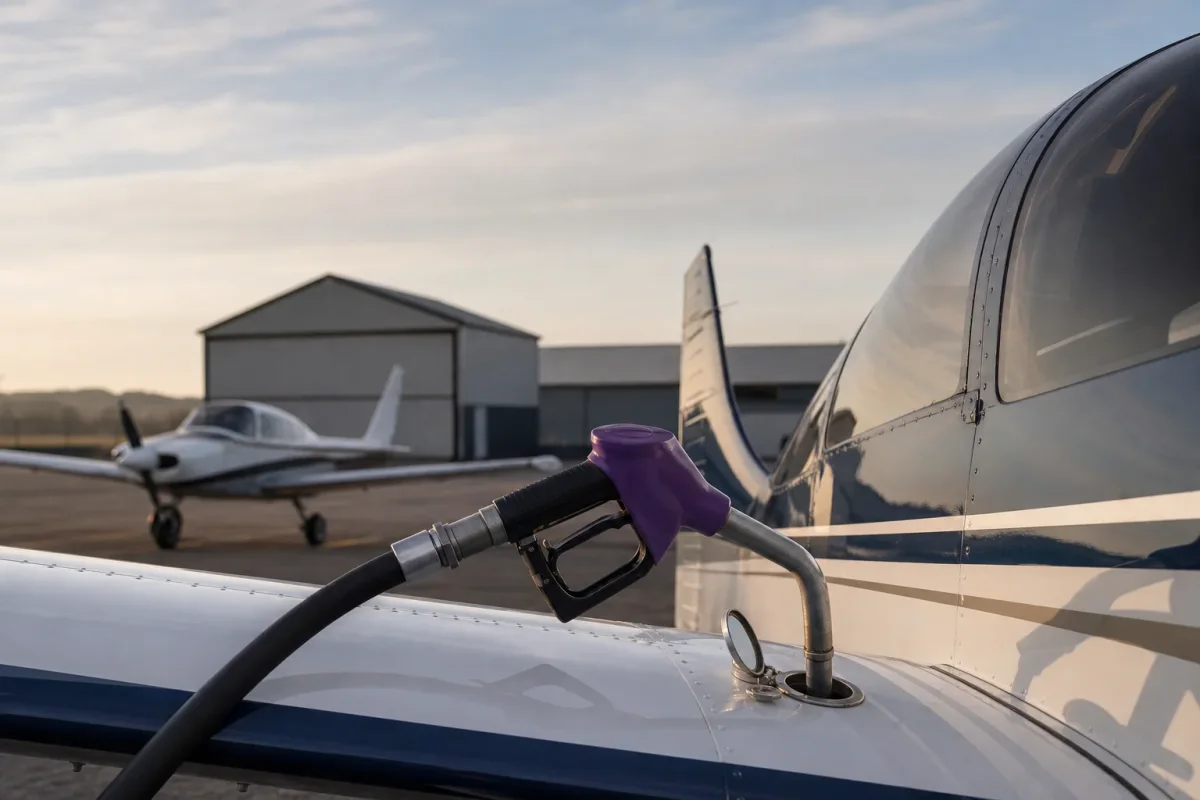
The Federal Aviation Administration released its Transition Plan for Unleaded Aviation Gas on Thursday, July 30, 2026. The plan provides a roadmap for safely integrating unleaded fuel into the general aviation fleet through a phased process covering fuel testing and authorization, market experience, the national transition and Alaska’s distinct transition requirements.
The plan fulfills a provision of the 2024 FAA Reauthorization Act requiring the FAA to partner with the aviation industry to safely transition the piston-engine fleet to unleaded aviation gas by 2030. The partnership was conducted through the Eliminate Aviation Gasoline Lead Emissions initiative, known as EAGLE.
“The transition to unleaded fuel is a positive step forward for general aviation community and people who live and work near general aviation airports,” said FAA Administrator Bryan Bedford. “Our move to safely integrate unleaded fuels is a collaborative effort that involves everyone from aircraft manufacturers and fuel suppliers to airports and the pilots in the cockpit.”
Testing and public comments
As part of the first phase, the FAA is testing three different fuels at the William J Hughes Technical Center to address questions about performance and compatibility. The agency said it will update the plan after the first phase is complete. In January 2026, the FAA published a draft transition plan and invited public comments. Those comments were used to improve and clarify the final plan, and the FAA said it will summarize them in a supplemental document scheduled to publish in late 2026.
Fuel availability during the transition
In collaboration with EAGLE stakeholders, the FAA is advancing production and use of unleaded aviation gasoline through several initiatives:
- Executing the FAA Piston Aviation Fuels Initiative to support Fleet Authorization for LyondellBasell/VP Racing’s UL100 and the recent addition of Swift Fuels’ 100R to PAFI.
- Expediting the rollout of high-octane unleaded fuel through the Supplemental Type Certificate pathway to approve GAMI’s G100UL and Swift Fuels’ 100R.
- Encouraging airports to introduce unleaded fuel alternatives while requiring them to maintain 100LL availability for aircraft during the transition.
- Enforcing Federal Grant Assurance obligations to prevent premature supply disruptions and ensure airports continue offering leaded 100LL until safe, fleet-wide unleaded alternatives are widely and locally accessible.