
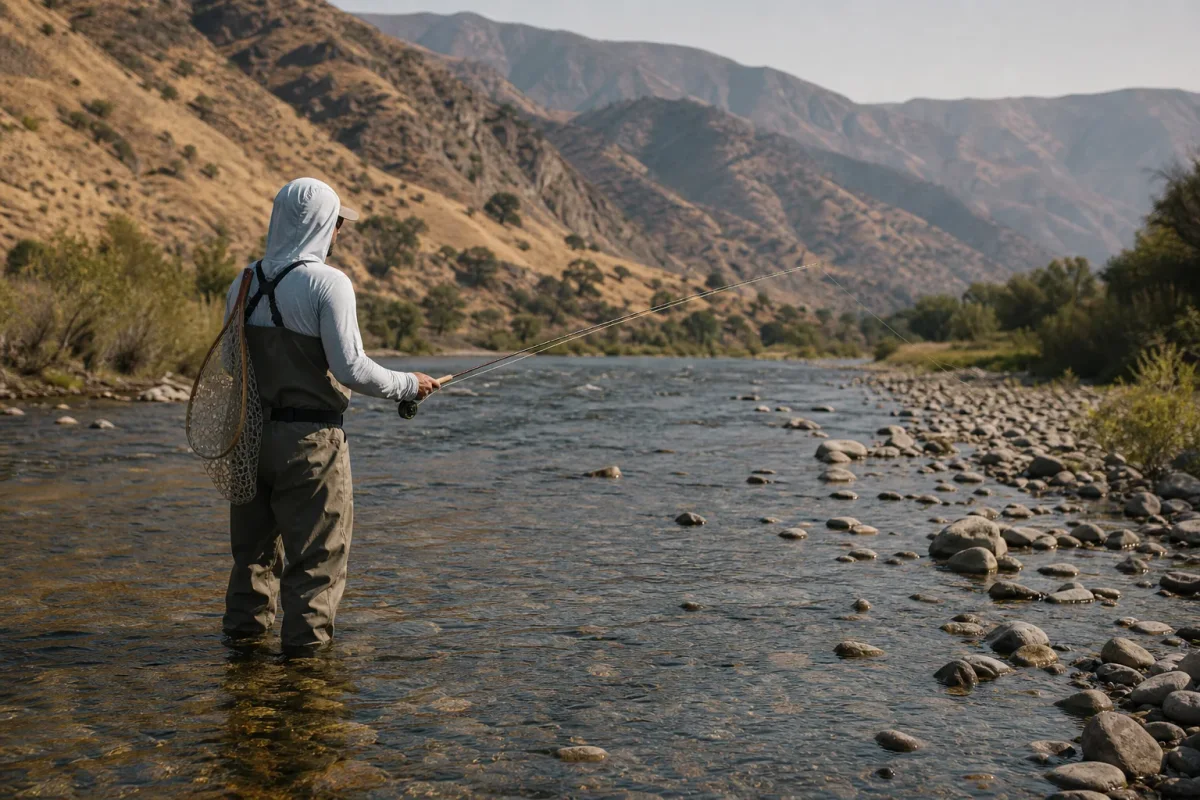
Trout need cool water to survive, but record heat this summer has driven water temperatures to lethal levels for fish. Wildlife officials are banning fishing during certain hours on rivers and streams across the U.S. West after an exceptionally dry winter and amid widespread drought. Lower water levels allow rivers to heat more rapidly, increasing stress on species including highly prized trout.
Anglers travel from around the world to fish for trout in Yellowstone National Park and Western Montana’s Blackfoot River, which was featured in the movie “A River Runs Through It.” More record temperatures were forecast for the weekend as a heat wave in the Southwest expanded north into the Rocky Mountains and east across the High Plains.
On the Yellowstone River near Livingston, Montana, California resident Mike Wever waded into the swiftly moving water Friday with a fly-fishing rod in one hand. He dipped his free hand into the river and said, “Not very cold.” Wever, 62, wore shorts instead of the customary waders. He said he supported closing stretches of the Yellowstone to fishing after 2 p.m. daily: “It’s great for us to have this resource. But we have to manage it.”
Many trout anglers release their catch after netting it. But temperature-stressed rainbow or cutthroat trout can die if they are out of the water even briefly for a commemorative photo, experts say. The restrictions are intended to reduce that stress during periods when river conditions are especially hazardous for fish.
Restrictions expand across the region
Colorado imposed restrictions this summer on 19 rivers totaling 635.5 miles (1,023 kilometers), a situation state officials described as unprecedented. Yellowstone on Wednesday expanded afternoon fishing restrictions to the whole park. That same day, wildlife officials in neighboring Montana broadened afternoon fishing restrictions to cover 1,200 miles (1,931 kilometers) of rivers.
Closures have become very common over the last decade plus, some might even say very routine from late June through early September.
The statement came from Adam Strainer, a biologist and administrator of the fisheries division at Montana Fish Wildlife and Parks. The trend coincides with rising temperatures as human-caused climate change warms the planet and droughts become more frequent and severe. Yellowstone has restricted fishing because of high water temperatures during five of the past six years, much more often than in the past, according to park officials.
The consequences extend beyond ecology because trout fishing is closely entwined with the economy in many Rocky Mountain communities. Dan Gigone, who runs Sweetwater Fly Shop along the Yellowstone River in Montana, said many visitors were pushing trips to the fall to avoid low water conditions.