
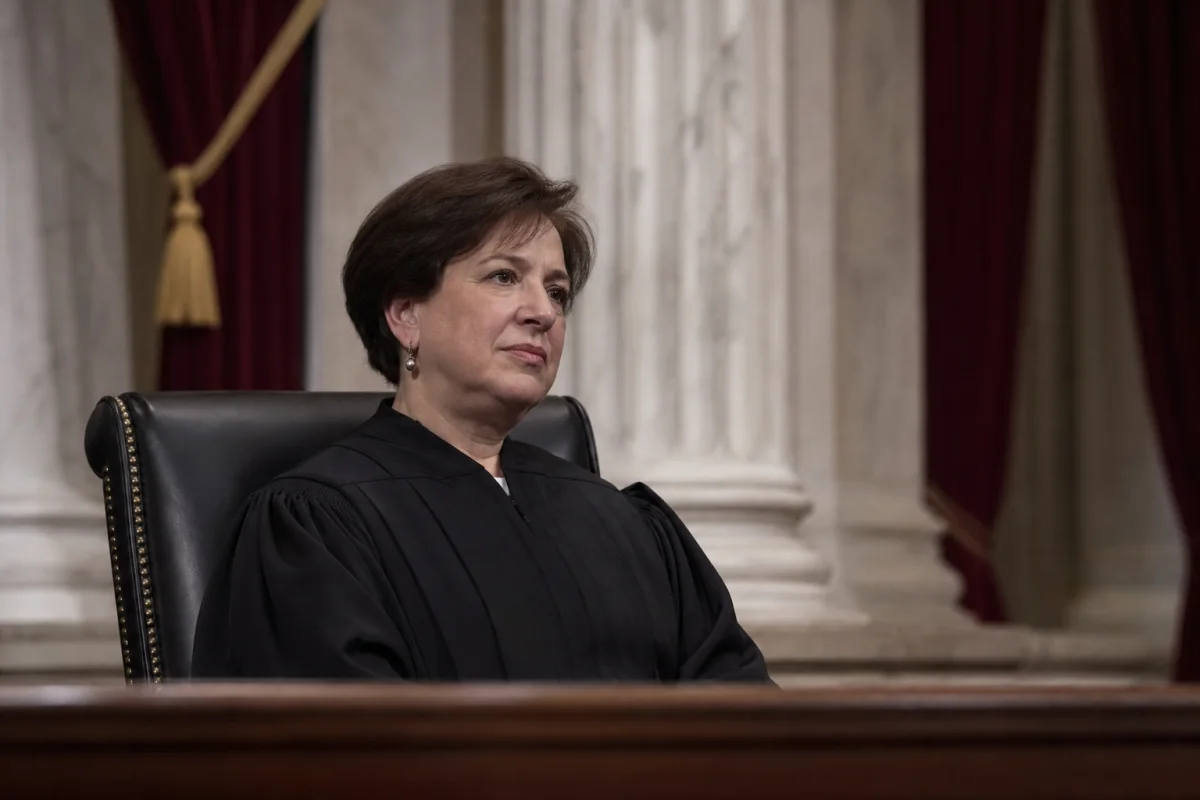
Justice Elena Kagan has described her 2015 opinion in Kimble v. Marvel Entertainment, LLC as one she had “thought about a lot over the years.” The case concerned royalties from a patent for a Spider-Man toy and whether the court should overrule Brulotte v. Thys Co., a 1964 decision holding that a patent holder cannot charge royalties for use of an invention after the patent expires. By a vote of 6-3, the Supreme Court left Brulotte in place.
Kagan’s majority opinion in Kimble is notable for its discussion of stare decisis, the principle that courts should generally preserve earlier rulings unless there is a very good reason to overturn them. She called the doctrine “a foundation stone of the rule of law” and wrote: “What we can decide, we can undecide. But stare decisis teaches that we should exercise that authority sparingly.” Since then, Kagan has frequently opposed decisions that discarded precedent.
Kagan dissented when the court overruled Abood v. Detroit Board of Education in Janus v. American Federation of State, County, and Municipal Employees in 2017. In Knick v. Township of Scott, she also dissented from the 2019 decision overruling Williamson County Regional Planning Commission v. Hamilton Bank of Johnson County. In South Dakota v. Wayfair, she joined a dissent arguing that Congress, rather than the courts, should change the rule established in Quill Corp. v. North Dakota because of the potential effect on a critical part of the economy. In Ramos v. Louisiana, she joined much of a dissent arguing against overruling Apodaca v. Oregon.
Her position was especially clear in Dobbs v. Jackson Women’s Health Organization, where she joined a rare joint dissent criticizing what the dissenters called “[t]he majority’s cavalier approach to overturning this Court’s precedents” after the court overturned Roe v. Wade and Planned Parenthood v. Casey. In Loper Bright Enterprises v. Raimondo, Kagan argued that Chevron v. Natural Resources Defense Council was “entrenched precedent” entitled to the protection of stare decisis, including because Congress could overrule it and governmental and private actors had relied on it for a long time.
Kagan has nonetheless joined opinions overruling precedent when those opinions explained why doing so better served stare decisis. She joined the 2015 decision in Johnson v. United States, which overruled James v. United States and Sykes v. United States, and joined the decision in Obergefell v. Hodges, which expressly overruled Baker v. Nelson. She also joined decisions in Hurst v. Florida and Herrera v. Wyoming that overruled earlier rulings. At a 2022 University of Pennsylvania appearance, Kagan said precedent promotes stability, judicial humility, gradual legal development, and protection against politicization. Her approach may receive another test when the court hears Kian v. Florida, in which a Florida man asks it to overrule Williams v. Florida, the 1970 decision rejecting a challenge to the state’s six-person jury system.