
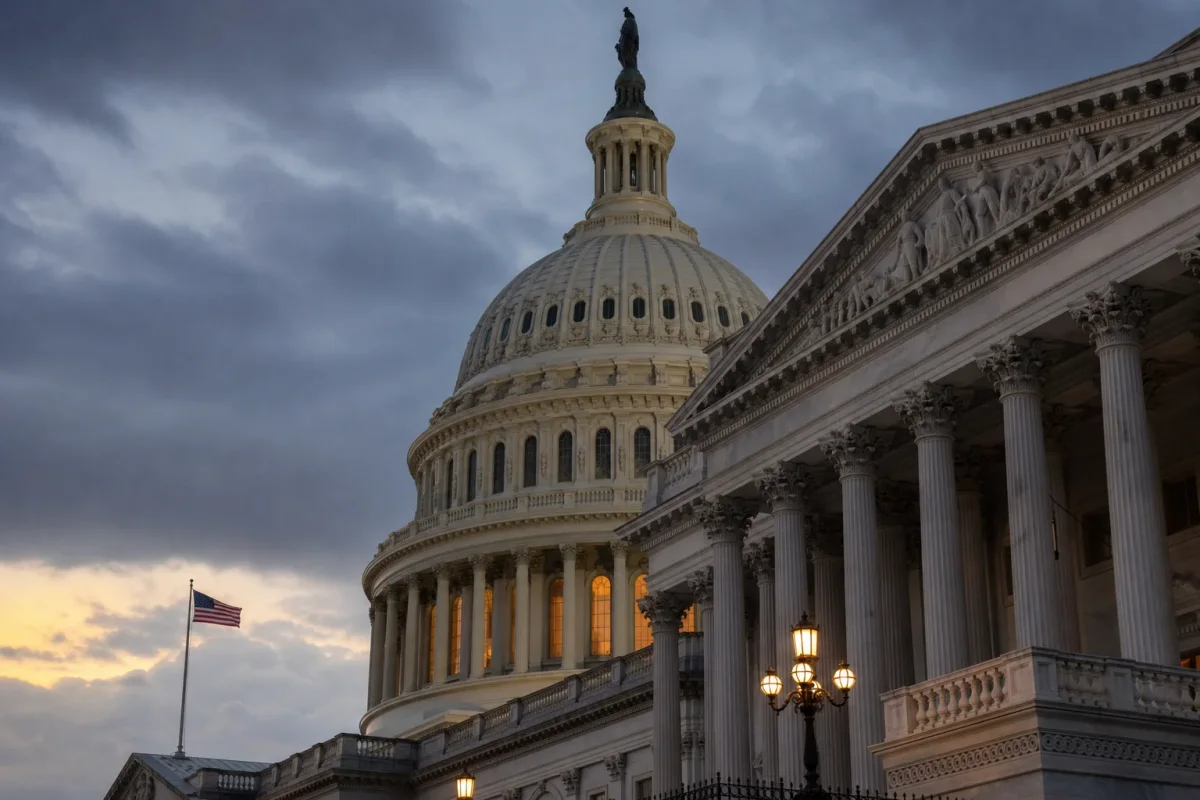
WASHINGTON (AP) — Key senators unveiled a short-term spending bill Sunday that would keep federal agencies funded past the midterm elections and into early December, as lawmakers seek to avoid a government shutdown during campaign season. The Senate is likely to vote on the measure before leaving Washington at week’s end for its traditional August recess.
The bill generally funds the federal government at current levels through Dec. 11. The House has passed a similar measure, but it did not include various exceptions sought by the White House. Senators have spent recent days negotiating which exceptions to include. One request that was not included, Democrats said, was the administration’s request for $1 billion to build “Trump-class” battleships.
The timing is unusual. Congress typically waits until the final days or hours before a funding deadline to pass short-term extensions, but senators are acting two months before the fiscal year ends on Sept. 30. Senate Majority Leader John Thune said passing the measure was his top priority before the August recess. He said Americans had already experienced two record-breaking government shutdowns in the previous 10 months. “We need to ensure that they do not face a third,” Thune said.
Negotiations continue beyond the stopgap bill
Congress has struggled to negotiate and approve the dozen annual appropriations bills before the Sept. 30 deadline. The extension would give lawmakers additional time to resolve differences over full-year funding. Republicans are seeking a significant increase in defense spending while cutting non-defense spending. President Donald Trump proposed an overall 10% cut to non-defense programs and a 44% increase in defense spending.
Both parties are seeking to avoid another shutdown before voters go to the polls. Polling indicated that neither party avoided blame for the previous fall’s record 43-day shutdown. Democrats sought to extend an expiring health insurance tax credit, while Republicans said that issue should be addressed separately. A separate dispute over funding for the Department of Homeland Security took 76 days to resolve after Democrats objected to funding U.S. Immigration and Customs Enforcement and the Border Patrol without changes to those operations.
The proposed bill would also delay a rule from the Trump administration concerning federal grants. The rule would require a senior political appointee at each agency to review grant proposals using criteria that include “ensuring that discretionary awards advance the President’s policy priorities.” Sen. Susan Collins, the Republican chair of the Senate Appropriations Committee, and Sen. Patty Murray, the committee’s top Democrat, said the rule would not take effect while the stopgap bill is in force. Collins said she sought significant changes because of the rule’s potential to politicize grants and harm small, rural communities, families and biomedical research. The White House Office of Management and Budget said the effort is intended to improve accountability and ensure taxpayer dollars are not wasted or misused.