
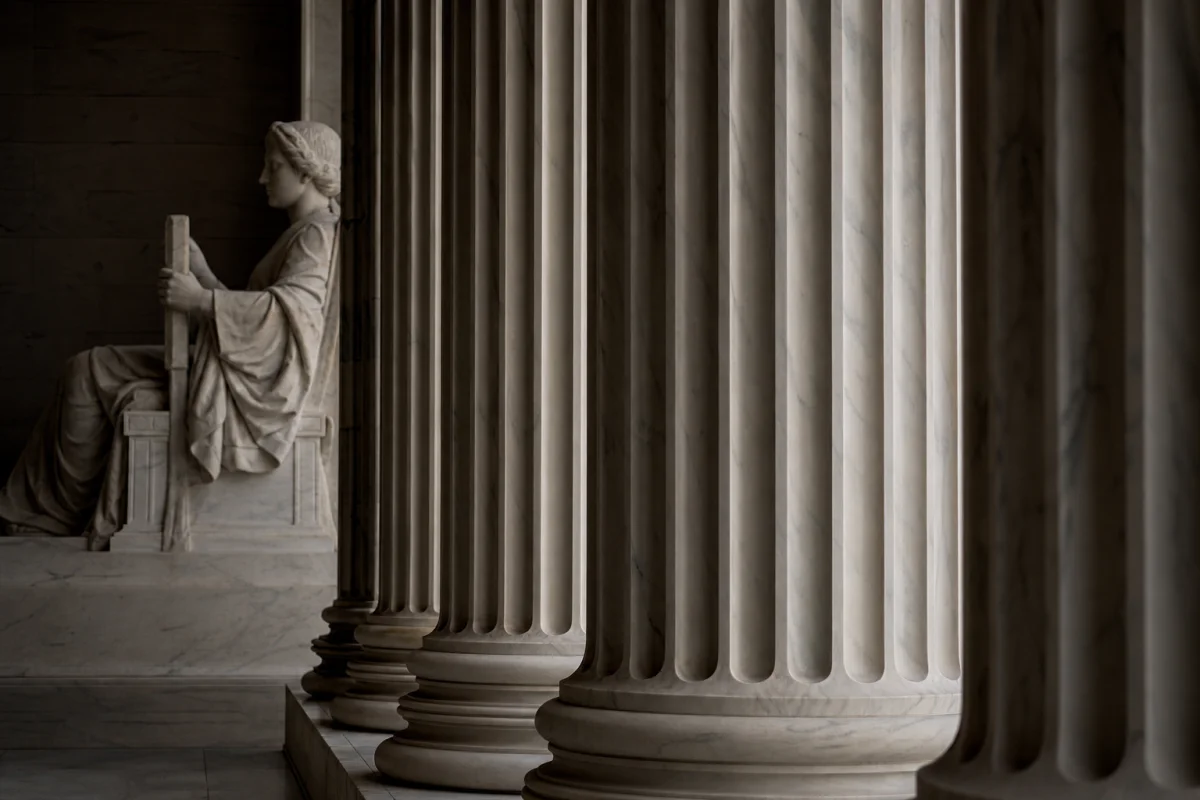
The Supreme Court regularly hears cases involving the First, Second and Fourth Amendments, but other constitutional provisions have received far less attention. Three examples are the 13th Amendment’s exception clause, the Guarantee Clause of Article IV and the Third Amendment. The court’s limited treatment of these provisions shows how it has approached constitutional questions in areas with little established precedent.
The 13th Amendment’s exception clause
The 13th Amendment, ratified in December 1865, abolished slavery and involuntary servitude but included an exception: “Neither slavery nor involuntary servitude, except as a punishment for crime whereof the party shall have been duly convicted, shall exist within the United States.” In 1907, Alabama prosecuted Lonzo Bailey, a Black farmworker, for fraud after he left a farm contract before its expiration. Unable to pay his fine and court costs, Bailey was ordered to perform 136 days of hard labor under Alabama’s peonage laws.
In 1911, the Supreme Court overturned Bailey’s conviction in a 7-2 decision written by Justice Charles Evans Hughes. Hughes held that criminal punishment could not be used to imprison someone for breaching a labor contract merely by labeling the breach fraud. Otherwise, he reasoned, a state could circumvent the amendment by attaching a criminal label to a contract dispute. The court later applied Bailey’s reasoning in Taylor v. Georgia in 1942 and Pollock v. Williams in 1944. In United States v. Kozminski, decided in 1988, the court considered whether psychological coercion could constitute involuntary servitude and concluded that the amendment covered legal or physical force. Congress and several states have since considered removing the exception, but the source reports no notable movement on the 2023 Senate resolution.
The Guarantee Clause and the Third Amendment
Article IV, Section 4 provides that “[t]he United States shall guarantee to every State in this Union a Republican Form of Government.” In Luther v. Borden, decided in 1849, the Supreme Court treated questions under the clause as political rather than judicial. The court later reaffirmed Congress’s primary role in Texas v. White and rejected a challenge involving Oregon’s ballot-initiative system in Pacific States Telephone & Telegraph Co. v. Oregon. In New York v. United States, the court left open the possibility that not every Guarantee Clause claim would be nonjusticiable. In 2019’s Rucho v. Common Cause, however, the court held that partisan-gerrymandering claims presented political questions beyond the reach of federal courts and described the relevant argument as more properly grounded in the Guarantee Clause.
The Third Amendment prohibits quartering soldiers in private homes in peacetime without the owner’s consent and requires authorization by law during wartime. In Engblom v. Carey, the U.S. Court of Appeals for the 2nd Circuit held that National Guardsmen were soldiers, employee housing was a house, lawful tenants were protected, and the amendment applied to the states through the 14th Amendment. The court did not decide whether New York had violated the plaintiffs’ rights, and the Supreme Court has never interpreted the amendment. The Third Amendment has instead appeared mainly as a supporting reference in Supreme Court opinions concerning privacy and military intrusion, including Griswold v. Connecticut, Katz v. United States and Laird v. Tatum.